

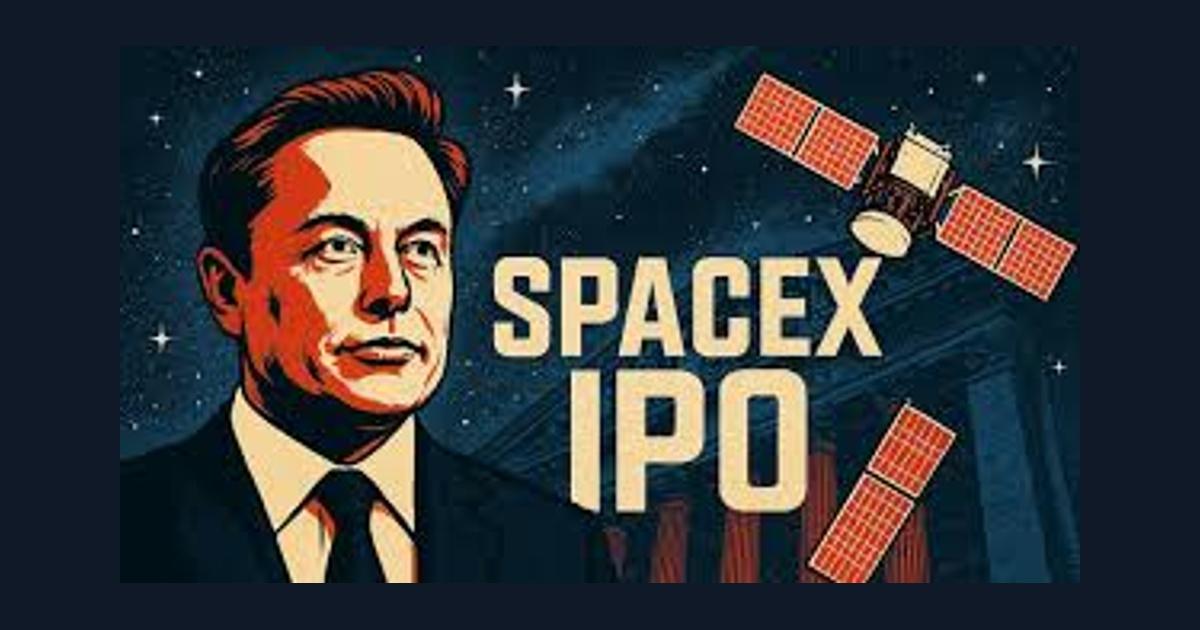
SpaceX Could Change the World. That Doesn't Mean It's Cheap
Over the last few weeks, one question has dominated financial headlines and client conversations:
“Should I buy the SpaceX IPO?”
It’s understandable why. Elon Musk’s SpaceX is preparing for what could become the largest IPO in stock market history, with a potential valuation between $1.5 trillion and $1.75 trillion (that’s trillion… with a “t”).
That’s a lot. Larger than many entire industries.
But before investors rush to buy shares, it’s important to separate the excitement from the investment reality.
Why Investors Are So Excited
SpaceX is no longer viewed as just a rocket company. Investors increasingly see it as a combination of:
- Satellite internet provider (Starlink)
- Defense contractor
- AI infrastructure company
- Telecommunications network
- Launch monopoly
- Long-term space infrastructure platform
In other words, many investors believe SpaceX could become one of the most important infrastructure companies in the world over the next 10–20 years.
Starlink has become a major reason for investor enthusiasm. The company now operates globally and has the potential to reshape internet access across rural areas, developing countries, disaster zones, airplanes, ships, and military operations.
The bull case for SpaceX is enormous.
There Are Real Risks
The challenge is that much of today’s valuation depends on things that have not happened yet.
According to recent IPO reporting, the company lost more than $4 billion in the first quarter of 2026 alone.
That doesn’t automatically make it a bad investment (many great companies have lost money during high-growth periods) but it does mean investors are paying heavily for future expectations.
And at a valuation approaching $2 trillion, expectations become extraordinarily high. There are also inherent risks to purchasing IPOs shortly after they begin trading publicly.
We saw similar excitement during the Facebook (now Meta) IPO in 2012. Initially priced at $38 per share, the stock surged nearly 20% on its first trading day before eventually falling more than 50% over the following months. It took roughly 16 months for the stock to sustainably recover back to its IPO price. Great companies don’t always start as great investments.
History reminds us that even transformational companies can be volatile investments when purchased at aggressive valuations.
Should Investors Buy It?
The honest answer is: How long are you willing to hold it?
For aggressive investors with long time horizons and high risk tolerance, SpaceX could eventually become one of the defining companies of the next generation.
But investors should avoid treating it like a guaranteed winner simply because:
- It’s associated with Elon Musk
- It will receive massive media attention
- It may initially surge after the IPO
The biggest investing mistakes often happen when excitement replaces discipline.
My initial thought is to be patient and let the excitement settle before deciding. IPOs of this size often create a fear of missing out, which can push prices well beyond what fundamentals alone may justify in the short-term.
I’d rather invest with clarity after the dust settles than make a rushed decision simply because everyone else is rushing in.
Sometimes the best investment decision is not avoiding a great company — it’s avoiding overpaying for one.
Innovation matters. Valuations matter more.
If you’d like to discuss whether an investment like SpaceX makes sense for you, don’t hesitate to reach out.